

On Reading the Bodleian Scroll in a Time of Need (Column 59)
From the analogy to an empty painting to the rejection of the "modern art" solution
The column opens with a Bodleian find that contains no writing at all, and with a first attempt to explain it through the analogy of an empty museum painting that is still called a "picture." But it rejects that direction: modern art is a late forgery, whereas the "scroll" is presented as an ancient tradition, so it must be given a Torah-halakhic justification rather than an aesthetic one.
Maybe it is Oral Torah that may not be written — and therefore its script is דווקא the absence of script
The column ties the scroll to the rule that "matters transmitted orally you are not permitted to write": perhaps precisely because this is Oral Torah, the scroll was made without letters, and the prohibition was thereby avoided. From this it formulates the paradoxical idea of a "script of Oral Torah" — writing whose faithful form is דווקא non-writing.
The difficulty from Isi's secret scroll and the move from "hiddenness" to "absence"
The difficulty is that the Gemara already speaks of a "secret scroll" that was actually written, even before the dispensation of "it is time to act for God," so one cannot simply say that Oral Torah is never written. From here the column proposes an artificial but deliberate distinction: there is "hiddenness" of writing that is concealed in inner rooms, and there is "absence" in which there is no writing at all; the Bodleian Scroll belongs to the second type, and therefore does not violate the prohibition against writing Oral Torah.
From a half-missing megillah to a completely blank one: nullification by majority versus the majority-as-the-whole
Once R. Yirmiyah identifies the secret scroll with Esther's scroll, the column moves to the laws of a megillah with missing letters. It uses the invented dispute over whether a megillah whose half is erased is valid because of nullification by majority or because the majority counts as the whole, and from that it builds an extreme move: if each erased letter is "nullified" one by one, then in principle one can even arrive at a megillah that has been erased entirely and still preserve its validity.
How the spaces themselves turn into script, ink, and book
From that move the column derives that the blank spaces are not mere absence but acquire a "status of writing," and therefore one can argue that the requirements of Ashurit script, ink, and parchment are fulfilled even in a blank megillah. Here the pilpul becomes even more explicit: it shows how, if one adopts mechanisms of nullification without limits, one can assign positive status even to air, emptiness, and total lack.
Why the reader must be drowsy and the listener unable to understand
The column connects the blank megillah to the rule that "if he read it while drowsy, he fulfilled his obligation": the reader is supposed to examine carefully letters that do not exist, and the drowsiness explains how he is not alarmed by the emptiness. By contrast, the listener must stay alert in order to correct the reader if he does not "read carefully," but later the column also exploits the rule of a foreign-language speaker who hears Ashurit in order to argue that if the listeners do not understand the language at all, both non-understanding and near-non-hearing are not disqualifying; according to an additional lenient view, the listener too may doze.
The satirical ruling: Esther's scroll as an empty book, and the jab at scholarship
At the end the Rashba's difficulty is cited: a megillah needs at least a beginning and an end in order to look like a book, a challenge that undermines even this far-fetched construction. The final answer is not halakhic but pointed: one relies on the Hazon Ish that "we do not pay attention to manuscripts" from the genizot, and the scholarly find can therefore be ignored. The column's conclusion is, in its satirical language, that the Bodleian Scroll is that very Esther scroll written as a "script of Oral Torah" — both a book and a letter with no writing and no letters — and with that it ends in a double mockery, of textual scholarship on the one hand and of pilpul that can validate any absurdity on the other.
 Loading…


A scroll came fluttering to me—see the footnote of our master Professor Stamma, master of the layers—who, amid the grave-rummaging practiced by those professors at the Bodleian (Oxford), found a hidden scroll; and this was its form:
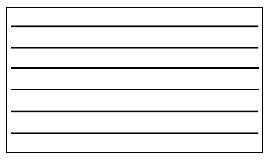
Many have wearied themselves trying to explain what is written in it. One says one thing and another says another; even Champollion goes on his way weeping, while the Bodleian scroll remains forlorn, though in the margins it rises and stands. The aforesaid therefore put to me an urgent question. My hand is but a feeble one to raise over it like a hammer, yet to disclose to him the secret of the scroll—what the Lord puts in my mouth, that I shall speak.
At the outset of my reflections I linked the matter to one of those wondrous midrashim set on display in the treasure-house called the Israel Museum, where they hung an empty picture of this sort (even without those lines; apparently those scoffers made it on Yom Kippur that fell on the Sabbath, by engraving from within) and placed beneath it the caption ‘Wooden frame with metal hanger.’ On that basis it seemed to me possible to resolve the Bodleian case: just as there the thing bears the designation ‘picture’ without there being any picture, so too the Bodleian piece bears the designation ‘writing’ without any writing (and Rashi explains: like that tale of Napoleon’s eruv), and the point is plain.
But an axe may be laid to this from what we hold: that that picture is counterfeit and is called modern art, whereas this hidden scroll is handed down to us from the medieval authorities, who were like angels[1]. It therefore long predates those wicked fellows called modernists, and so it seems to me extremely forced to place the Bodleian case within the school of those modernists. The question therefore returns to its place; the matter still requires great investigation, and there is no carpenter, nor carpenter’s son, to resolve it.
I saw that this was a time of distress for Israel, from which salvation would yet come. Therefore I girded my loins like a man and strapped on the quiver of my arrows with might. May my teaching drop like rain, and may even my tears flow like dew. None is a truer sapling than I; surely I am better for you than a jar of manna. I raised over it my strong hand, the hand of a craftsman, and became for you both Esther and Haman. I explained the matter plainly for all to see; may its leaf not wither. And this is my beginning, with God’s help.
First, by way of introduction, what is stated in Gittin 60b:
Rabbi Yehuda bar Naḥmani, the interpreter of Rabbi Shimon ben Lakish, expounded: It is written, “Write for yourself these words,” and it is written, “for according to these words.” How so? Matters that are written you are not permitted to say by heart, and matters that are oral you are not permitted to put in writing.
Thus we hold that the Oral Torah is not set down in writing and does not brook writing, until Rabbi’s enactment on the basis of It is a time to act for the Lord.
From here one may infer that perhaps this Bodleian hidden scroll belongs to the Oral Torah, and oral matters may not be written; therefore they made it like a deep pool without letters, so as not to transgress the rule that oral matters may not be written. My two kidneys became like two rabbis and told me that nevertheless it still has the status of writing—only it is the writing of the Oral Torah. This is what the sages of the West called the unity of opposites, and in their wake marched the new Hasidim, along with many blind and guileless souls, as it is said: my father chastised you with whips. Until I arose, bold as a leopard and gentle as a Litvak, and blunted their teeth with the force of my sharpness; and I wrought for my house and my people according to my request, by my strength though not by the might of my hand.
And in Bava Metzia 92a we learned:
For Rav said: I found a hidden scroll in the academy of Rabbi Ḥiyya, and it was written in it: Isi ben Yehuda says, regarding “When you come into your neighbor’s vineyard,” the verse speaks of the entry of any person. And Rav said: Isi left no one alive.
Here we see that they wrote Oral Torah in secret even before Rabbi’s a time to act.
But this requires examination: how did Isi do such a thing? It concerns oral matters, and those may not be written. A further difficulty: what good did it do to do so in secret? We hold (Sabbath 146b):
Rav Yehuda said in the name of Rav: Wherever the Sages prohibited something because of appearance, it is forbidden even in the innermost chambers.
And indeed, with our Isi the saying of Sotah 3a was fulfilled:
It was taught: Rabbi Meir would say, A person commits a transgression in secret and the Holy One, blessed be He, publicizes it openly, as it is said, “and a spirit of jealousy came over him”; and “came over” means a proclamation, as it is said, “And Moses commanded, and they proclaimed throughout the camp.”
You might say that secrets are permitted, for a hidden scroll differs from the privacy of inner rooms. Not so. For we learned that that scroll of Isi actually contained the words Isi ben Yehuda says…; it certainly was not like this Bodleian hidden scroll, which contains no words or letters at all. The point is plain.
A further difficulty regarding Isi’s hidden scroll: why did it have to be hidden? What secret was in it? Now I found in the book ‘Pilpulim of Ahasuerus’ that the case concerns one who got entangled with his yevamah (levirate widow), and Rashi explains: on When you come into your neighbor’s vineyard—this is what is meant by the entry of any person, and ‘his vineyard’ is his yevamah. On this reading too Rav’s statement that Isi left no creature any life is nicely explained. A fine and sharp insight indeed.
But then I found a hidden sage, renowned in the gates, our master the author of ‘The Method Attributed to No One’; from the sheer concealment of his wisdom, no one pays him the slightest attention. He is like that beggar in the tales of our master the Snuffler from the Barking Strait, who wrote that the passage concerns Sabbath labors, as we learned (Sabbath 6b):
For Rav said: I found a hidden scroll in the academy of Rabbi Ḥiyya, and it was written in it: Isi ben Yehuda says, There are forty minus one primary categories of labor, and one is liable only once. Is that really so? But did we not learn: There are forty minus one primary categories of labor; and we discussed it: Why do I need the number? And Rabbi Yoḥanan said: To teach that if one performed them all in a single lapse of awareness, he is liable for each and every one.
And it was further reported in the name of Rav Harata: granted, according to Isi, if it deals with the entry of any man, that is why it had to be hidden; but according to the view that it concerns the Sabbath labors, what was there to conceal? These are truly mountains hanging by a hair, weightier than the hanging gardens of Babylon. To resolve all this, it appears that the hiddenness here stems from he’elem—unawareness—not from hester—concealment. This is supported by the wording, for it teaches that if he performed them all in one ‘unawareness’; the writing of a hidden scroll is itself that unawareness. Hence there is no difficulty from private rooms, for private rooms are one thing and unawareness another: in private rooms it is indeed forbidden, but in unawareness it is permitted. The explanation is that if one writes in private rooms, it still counts as writing, only it is concealed; but in unawareness there is no writing at all, and in that all agree it is permitted. This also explains the Bodleian case. Obviously it is not one of Isi’s scrolls, in which there is writing, only in private rooms; in this scroll there is no writing at all, and they acted properly, for in such a case there is no prohibition whatsoever against writing the Oral Torah. Blessed is the Merciful One who has aided us—not by my merit, but by the merit of my holy forebears of blessed memory, who enabled me to grasp the secret of the words of our sages and their riddles. Yet the matter still needs examination, for as I shall prove below, even in concealment there remains writing.
Meanwhile Rabbi Jeremiah awoke from his dozing and said: Children, this hidden scroll was Esther. This point may be explained by way of what we find in Megillah 19b:
The Rabbis taught: If the scribe omitted letters or verses from it, and the reader read them like a translator who translates, he has fulfilled his obligation. An objection was raised: If it had blurred or torn letters, if their form is still recognizable it is valid, and if not it is invalid. This is not difficult: that case refers to the whole of it, while this case refers to part of it.
Here we see that if some of its letters fell out, it is valid. And the halakhic decisors wrote that this extends up to half of it (see Orah Hayyim 690:3):
And ideally it must be written out in its entirety before him; but after the fact, if the scribe omitted words in the middle, even up to half of it, and the reader recited them by heart, he has fulfilled his obligation.
However, in the Bodleian scroll all the writing is missing; here it is obvious that this helps nothing at all.
This may be explained by first introducing a dispute among our masters, the crowns of our heads, the medieval authorities, who were like angels: whether the initial requirement that it be entirely written means that if part is missing it is thereby invalidated, or whether there is an independent requirement that it be fully written. The practical difference concerns a scroll that is half written and half erased after the fact: is its validity based on nullification by majority, or perhaps on the rule that a majority is as the whole? It seems that this depends on the dispute whether, in nullification by majority, the missing portion is treated as still present, only stripped of its invalidating status, or whether the missing portion is nullified as though it were not there at all. For if it is as though it were not there, we still lack those letters in the scroll and cannot validate it by way of nullification. But if the minority is treated as still present and takes on the status of the majority, then this scroll indeed contains all its letters. It follows that nullification by majority can be invoked in a scroll only if the missing portion is treated as extant. According to those who hold that it is as though nonexistent, the validity of the erased scroll rests on the rule that a majority is as the whole.
In the responsa ‘Haman Ha’etz’ it is explained that the rule is nullification by majority, and therefore he wrote that the erased portions must be well mixed among the written ones, as in: and_the___I_I_brother_war_that_he__brother___and that_the ruler_from__duo…; otherwise there is no mixture and hence no nullification. But the questioner in the responsa ‘Tzintzenet ben Hamdata’ wrote that it is based on the rule that a majority is as the whole, and validates it even without admixture, as in: ________________He is Ahasuerus, who reigned from India….
And I found in the book ‘Fields of Mead and Liquor,’ in the section ‘The Wonders of Vaizata and Parshandata,’ Haman section ‘Like Coriander Seed,’ paragraph ‘Like Wafers in Honey,’ a major practical difference between these two golden jars, namely regarding a scroll that was half written and then lost one more letter besides it (do not rouse Rabbi Jeremiah): according to the gaon, author of ‘Haman Ha’etz,’ who validates an erased scroll on the basis of nullification by majority, we may indeed say kama kama batel—each increment is nullified as it comes—and it remains valid. But according to the gaon, author of ‘Tzintzenet ben Hamdata,’ it is invalid, for now it no longer contains a majority of its letters, and thus it is not as the whole.
With this the Bodleian case is resolved splendidly (some read: by local liquor), for according to our master the gaon, author of ‘Haman Ha’etz,’ the above hidden scroll is well understood. It can be interpreted as a scroll that had been half written, and its letters were erased one after another; each time they revalidated it on the principle of kama kama batel, until it became the Bodleian hidden scroll itself, in which there is nothing at all—not even half a thing. This is unlike Isi’s hidden scrolls, in which half a thing was written in private rooms. Mark this well.
From our discussion we have won a precious gem: those blank spaces too have the status of writing, for we follow the view that the minority is treated as still present, only the status of the majority falls upon it. From this we learn that those blank spaces in an erased scroll count as writing, and the point is plain. Below a major practical consequence of this will be explained.
Indeed, it is stated in the Talmud (Megillah 17a):
If it was written with sap, red paint, gum, or vitriol, on paper or on parchment, he has not fulfilled his obligation unless it is written in Assyrian script, in a book, and with ink.
Thus we learn that the scroll must be written in Ashurit script, in ink, and on parchment. This raises a difficulty regarding the Bodleian scroll, which is not written at all: how, then, are Ashurit, ink, and parchment fulfilled in it? Surely our sages at the Bodleian are not suspect in such matters, and we would thereby cast slander on earlier generations, heaven forbid. Under pressure one might reply that where there is writing, ink and parchment are required; but where there is no writing, we are unconcerned—for Anyone fit for mixing is not prevented by the lack of mixing..
But on our path the matter is easily settled: even the Bodleian hidden scroll has the status of writing, for an empty set too is called a set. This depends on the dispute between ‘Tzintzenet Haman’ and ‘Haman Ha’etz’ mentioned above; let the wise man grow still wiser. We likewise saw above that those blank spaces have the status of writing. And if you should say that in Bodleian there is no writing at all, so that there is no majority to confer the status of writing on the spaces, we have already explained plainly that we arrive here by way of kama kama batel. Thus even a completely empty scroll like Bodleian has the status of writing, and thereby Ashurit, parchment, and ink are fulfilled in it with special embellishment. Indeed, the matter may depend on the dispute between Rashi and the Ran in Sukkah 9a as to whether nullification applies to air-space in the roofing, and the point is clear. The practical difference is whether we say kama kama batel of the air-space of the roofing, and we have thereby won a precious gem—validating, in the most scrupulous manner, a sukkah with no roofing at all. Quite simple.
Now the author of ‘Reflections of Zeresh,’ together with the commentary ‘Bigthan and Teresh,’ came here with a mishnah in hand, namely the mishnah in Megillah 17a:
One who reads the Megillah out of order has not fulfilled his obligation. If he read it by heart, or read it in translation, in any language, he has not fulfilled his obligation. However, it may be read to those who speak a foreign language in that language, and a foreign-language speaker who heard it in Assyrian script has fulfilled his obligation. If he read it intermittently, or while drowsy, he has fulfilled his obligation. If he was writing it, expounding it, or proofreading it, if he directed his mind, he has fulfilled his obligation; if not, he has not fulfilled his obligation. If it was written with sap, red paint, gum, or vitriol, on paper or on parchment, he has not fulfilled his obligation unless it is written in Assyrian script, in a book, and with ink.
And there, on 18b, we find:
If he read it while drowsy, he has fulfilled his obligation, etc. What are the circumstances of being drowsy? Rav Ashi said: asleep but not fully asleep, awake but not fully awake; if they call him, he answers, but he does not know how to respond with reasoning, yet if they remind him, he remembers.
The upshot is that if the reader reads the scroll while dozing—sleeping and not sleeping, awake and not awake—he has fulfilled his obligation. Not a single decisor ever bothered to say that the passage was not speaking of an empty scroll. We have therefore arrived at the remarkable ruling that one who reads the scroll while asleep, unable to respond when called, but who, if reminded that he is now reading the scroll, immediately recalls this powerful reasoning—that one who dozes while reading from an empty scroll has fulfilled his obligation—has indeed discharged his duty. Every heart must wonder and every tongue rejoice merely to hear it, though our soul faints within us.
However, in Shulchan Arukh, Orah Hayyim 690:12, this great stringency was codified:
If he read it while drowsy, since he did not fall fully asleep, he has fulfilled his obligation; but if he heard it while drowsy, he has not fulfilled his obligation.
He ruled that only the reader may doze, whereas the listener must stand firmly on guard. At this every astonished person must ask: whence came this novelty, and from what womb did these pearls emerge?
According to our discussion, however, it is very well explained: the reader studies this Bodleian hidden scroll carefully and examines with great precision the letters that are not in it—for otherwise he would not fulfill his obligation—only he is dozing, and so fails to notice that it has no letters at all. This also explains why these two laws were brought together in a single mishnah. But the listener must be very alert, lest the dozing reader fail to scrutinize properly the letters of the empty scroll; then the listener, holding a Pentateuch in hand, will immediately correct him. And the words are as joyous as when they were given at Sinai.
Yet the puzzled reader will indeed ask: why did the sages formulate the matter so that an alert listener fulfills his obligation by hearing a drowsy reader reading from an empty scroll? After all, by the law that the listener is as the speaker, we hold that if there is no reader there is no listener. A further difficulty: if the drowsy reader read from a scroll without any letters at all, and they reminded him that he was presently reading the scroll, and he shook himself awake from his reverie—his own state of awake and not awake—how did the alert listener fulfill his obligation if he heard nothing at all? What precisely are reader and listener scrutinizing? If there are no letters, there are no words; and if there are no kids, there are no goats.
This may be resolved by first citing what we learned in that very same mishnah:
and a foreign-language speaker who heard it in Assyrian script has fulfilled his obligation.
Thus we learn that foreigners who heard it in the holy tongue fulfilled their obligation. Everything is now well settled. We may establish the case as one in which the drowsy reader read from an empty scroll in the holy tongue, while the listener is one of the foreigners who understands absolutely nothing of the holy tongue. In such a case, even if the listener understood nothing at all, we are unconcerned, and no one can object to his scrutiny.
Afterward I saw in the responsa ‘Confused Shushan’ that in such a case the listener too may doze and still fulfill his obligation, for what difference is there between hearing and not understanding, and not hearing at all?! The matter is simple, alive, and tangible—see the sacred work ‘Indeed?,’ by the eminent Lea Goldberg—and worthy of the one who said it.
Let us return to the law. It emerges that the reading of the Bodleian scroll took place as follows: the reader held in his hand a blank sheet of paper (ruled, of course—words of peace and truth, like the truth of the Torah—in order to beautify the non-writing, so that the non-letters should not, heaven forbid, be crooked, by the law of beautifying a book; those are exactly the ruled lines in the scroll above, as the upright eyes of the reader can plainly see), and he read it with immense, awesome, and wondrous precision of letters, while dozing as wine cheered his heart, awake and not awake, asleep and not asleep. Then his students would come and remind him: Master, the time for the morning recitation of the Shema has arrived. He would immediately rouse himself—for otherwise he would not discharge the obligation of the scroll. The listener, and indeed the whole congregation, who spoke only Mandarin Chinese, had to open their ears wide like a funnel to hear the words of the sages and their riddles and to understand something from nothing; otherwise they too would not fulfill their obligation, heaven forbid. According to the view of ‘Confused Shushan,’ he too may sleep together with the reader, until the sleepers of the dust awake and the dead of Hebron arise with them. And in their thought all these righteous ones will raise up every letter and word of the holy scroll and scrutinize them and their secrets down to the depths of Sheol and the great abyss, until the whole city is thrown into confusion—the city of Confused Shushan.
Some have written, however, that in such a case one should add to the blessings over the scroll also the bedtime blessing ‘Ha-mapil,’ and it is obvious that even if one reads the scroll from within sleep after Ha-mapil, we are unconcerned, for Mental reflection is not equivalent to speech., but this is not the place to elaborate.
Yet after writing all this I saw in Rashba that he raised the following objection regarding the erased scroll:
This is not difficult: that case refers to the whole of it, while this case refers to part of it. It is difficult for me, for do we not say later that the law follows Rabbi Meir, who says the whole of it; and even according to the one who says that from “There was a Jewish man” onward, it still requires that the whole of it be written, whereas here we permit it even though up to half is missing. And I would say that there, when the two ends of the Megillah are written before him, even though verses in the middle were omitted, it does not appear like a deficient book but like a complete book containing errors. And with a Megillah, since it is called an epistle, they are not exacting about some of its errors; but when it contains errors in the majority of it, it is invalid, since it is also called a book. But when it is missing from its beginning until “There was a Jewish man,” even though that is a minority of it, it appears like a deficient book, and he must read it from a complete book.
It follows that according to him one requires a beginning and an end in order for it to receive the status of a book, and this remains a very great difficulty for the Bodleian case, since it has neither beginning nor end. Some wished to resolve this by saying that the beginning and end there dropped out because of similar endings, and the point is clear. Yet from our mighty master, the Hazon Ish, we have heard, reasoned, and accepted upon ourselves in the days of Ahasuerus that no heed is paid to manuscripts exhumed from genizot. With this we ascend and with this we descend, and after his words there is nothing more to add. Cursed be all the researchers and blessed be all the righteous; and the footnotes shall bear witness and be vindicated, and Harbonah too is remembered for good.
And now let us turn our attention and return to the road that turns eastward: the Bodleian scroll has the status of a book even though it is also called a letter, and this is the writing of the Oral Torah. It is none other than the Esther scroll, which is called both a book and a letter, requires ruled lines like the truth of the Torah, and may be read drowsily from an empty book when the reader is asleep and the listener understands nothing at all (and according to the view of ‘Confused Shushan,’ he too is asleep).
This is what Esther asked of the sages—Write me down for future generations—and they made it like a deep pool without fish, like a book without writing and without letters. This indeed is that Purim letter, the Oral Torah that was written and erased upon a scroll in the script of the Oral Torah.
The rest of the tale of my power and might is surely hidden away with the Ancient of Days, blessed and exalted be His name, who has covered it in His treasury to this very day, to gladden all our hearts. M.A., of the holy community of Ramat Alyashiv, Lod and environs.
[1] From here you will readily understand why, compared with them, we are like donkeys: we buy a ticket to that museum of the great mocker. Of this our sages said: suckers do not disappear from the world; they merely get replaced. And the point is plain.
Discussion
And they have already remarked from that case of Geniva, who wrote without ruled lines and they hung it on his collar
Had he written with a collar and hung it on the ruled lines
Would not Mr. son of a thief have signed it
For matters committed to writing you are not permitted to recite at twilight as darkness falls
And for this they hung him, and the people of the West bought with song and shall not drink wine
As it is written: “and sealed”
Like a scroll of books that no one expounds or seeks out
Therefore my signature is with the signet ring of the king’s house in engravings
Rejoice at this time
Like a deep that has no fish in it
As people say
Better this new little bird in the hand
Than thousands of gold and silver
The youngest among the thousands of Manasseh
Gelda Menachem Bila Mendil
From Yeshivat Maharat
Sleeping like a hero
Struck down, but not from wine
The name of the city is “Eksferd” (not “Eksfard”), and it is a combination of “eks” = “ox,” and “ferd” = “horse,” for among the sages of the city were scholars who plumbed the depths with the force of their analysis, in the sense of “abundant produce comes by the strength of the ox,” and they were swift in their running like a horse, rapidly traversing the expanses of Bible and Talmud. And because of the complementary combination of these two abilities, the city was called “Eks-Ferd.”
With blessings, Sh. L. Haresh
And the Torah already foresaw from afar this dreadful prohibition
Academic studies in colleges and universities
In the verse “You shall not plow with an ox and a donkey”
And there is nothing that is not alluded to
Even what a small pupil is destined to innovate out of his narrow mind in Khurmiza
With God’s help, Shushan Purim 5777
Blessings from the skies of Eretz, to moishbb, path-maker and breach-repairer, who vigorously protests the mixing of domains in the land.
However, when one does not mix them, and knows how to give each discipline its proper boundary—there is a Cambridge (= bridge) between ox and horse, and between Torah and science, as it is written (Bava Kamma 17):
“Rabbi Yohanan said in the name of Rabbi Shimon ben Yohai: What is the meaning of that which is written, ‘Happy are you who sow beside all waters, who send forth the feet of the ox and the donkey’? Whoever engages in Torah and acts of kindness merits the inheritance of two tribes… He merits a canopy like Joseph, as it is written, ‘Joseph is a fruitful son… his daughters stride over the wall [shur],’ and he merits the inheritance of Issachar, as it is written, ‘Issachar is a strong-boned donkey.’”
And one may say that Joseph approached the improvement of the social, governmental, and economic order מתוך a Torah-based, faithful worldview, and supplied “abundant produce by the strength of the ox” to all humanity; while the sons of Issachar, “who had understanding of the times,” calculated seasons and constellations and used the knowledge of the natural sciences to magnify and glorify the Torah.
And the Maharal of Prague (if I recall correctly, in one of the opening chapters of Tiferet Yisrael) explained that the “ox” expresses the power of analytical inquiry that plumbs the depths, whereas the “donkey” expresses the perseverance to study and review so as to increase one’s breadth of knowledge across the expanses of Torah; and both of them, analysis and breadth, need one another and complement one another.
With blessings, Shimshon Haresh Levvvinger
To him whose every path is justice,
Who founded the earth and sped along its paths.
Haresh, swift as a gazelle and mighty as Samson,
His writings are spread throughout all the land of Carmel and Maon.
Well has he spoken, and his words befit him,
To distinguish between them—there his voice rang out.
That which belongs to researches and excavations of their own,
And to Afifyer let his allotted portion be prepared.
When the ox gave its strength to inquiry,
In Prague the lion roared—who would not fear at heart?
The donkey, but not the tools, fell into the pit,
At a time when all set their hand to digging.
It is a glory to Israel, and through it he shall be delivered;
Drink and eat in the walled cities from the days of Joshua.
When those in unwalled towns sober up from the excess of wine upon their beds,
We shall study the writings of his tribute and learn much from them.
May it be His will that his domain increase with students,
And like a lion may he raise his voice, roaring in secret places.
May he be sated with contentment by the full double handful,
So I pray—this small one who grasps the hem of the trailing cloak.
Twice I have regretted not learning Aramaic—the first time after I bought and read Rabbi Sherlo’s After You We Will Run, and now after I have looked at your words of Torah in honor of Purim…
With God’s help, Purim of the unwalled city, 5777
The custom of the Philalagin community is to read with all variant readings, such as “and no man could stand against them” and “and no man could stand before them”; “to destroy and to kill” and “to destroy, kill,” and the like. Thus one fulfills the obligation according to the entire apparatus of Kittel-Kahle (and the scrupulous also take BHS into account).
As for the Bodleian version, it is in the category of “what no eye has seen,” a foretaste of the world to come, and it is obvious that one should be concerned for that as well; except that one must make a stipulation at twilight and say, “Bodl I am not”…
With blessings, Shimshon Tzvi Levinger (and some say: Levvinger, and others: Lavvinger)
son of David Shmuel HaLevi Levinger, director of the Institute for Photographs of Hebrew Manuscripts at the National and University Library (according to another version: the National Library)